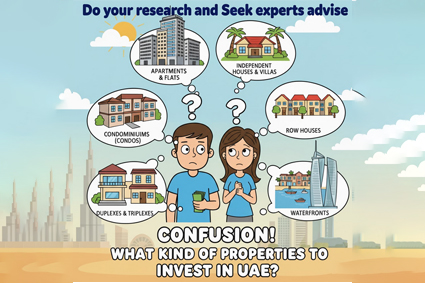

New Projects in Dubai

Starting From Above Range

Full collection of properties from developers. Save your time on exploring the, market, taking free consultation on all projects in one place

# Unlock 12%+ Tax-Free Returns: Your Gateway to Dubai Real Estate Investment.


Partner with Dubai’s leading property experts to secure high-yield assets and the Golden Visa.
What is your purpose of purchase?

What type of property are you interested in?

Select the option that best describes your needs.

How many bedrooms do you want?

Specify an acceptable price range

Project delivery or handover date?

What would you like to have nearby?

How would you prefer to be contacted to discuss your inquiry further?

Provide your name and phone number

Where should we send the selection?

🇮🇳 +91

Thank You!

Your property preferences have been submitted successfully.

How to determine the real estate investment goal?

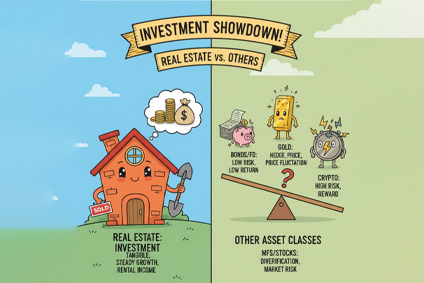
How to compare real estate investment with other investment opportunities?

Respecting your hard-earned money, we provide thorough comparisons to ensure your decision to invest in UAE real estate is well-informed and strategic, not rushed.

While various asset classes are available in the UAE real estate investment offers a unique combination of high, tax-free returns, tangible value, and stability that often positions it as a superior long-term wealth creation tool. Unlike instruments such as stocks and cryptocurrency that are highly volatile, or fixed deposits and gold which lack income-generating potential, UAE property provides consistent rental yields and robust capital appreciation.

Real estate vs. passive assets (FD, RD, gold)

  • Income generation: FD, RD, and gold offer limited returns (FDs and RDs offer fixed interest, gold provides no income), while real estate provides a steady, high-yield passive rental income stream that can be significantly higher than interest rates.
  • Inflation hedge: Gold traditionally serves as an inflation hedge, but real estate prices and rental income typically rise in proportion to inflation, protecting and growing your purchasing power.
  • Leverage: Unlike FD, RD, and gold, real estate can be leveraged with financing, enabling investors to control a high-value asset with a smaller amount of initial capital and magnifying potential returns on investment.

Real estate vs. volatile assets (crypto, stocks)​

  • Stability and tangible value: Crypto and stocks can experience dramatic and rapid price swings, while real estate is a tangible asset with lower volatility, providing greater stability. Real estate offers a physical asset that can be used or improved to increase its value.
  • Control: With real estate, investors have direct control over their asset and can influence its returns through management, renovations, or choosing between short-term or long-term rental strategies. Stock and crypto values are influenced by external market sentiment and broader economic factors.
  • Lower risk: For those with a lower risk tolerance, real estate offers a more predictable investment path with consistent rental income, especially compared to the high-risk, high-reward nature of cryptocurrency.

Real estate vs. managed funds (MF)

  • Direct control vs. blind investment: Mutual funds offer diversification but involve handing over investment decisions to a fund manager. Real estate gives investors direct control over the specific asset, location, and strategy.
  • Fees: Mutual funds charge management fees, which can impact overall returns. Real estate investment involves its own costs, but the high, tax-free rental yields in the UAE often significantly outweigh these fees, offering a clearer picture of net profit.
  • Tax efficiency: Profits from some mutual funds and stock investments may be subject to taxes in other countries. The UAE offers a tax-free environment for real estate income and capital gains, maximizing investor earnings.
  • Ultimately, while FD, RD, gold, crypto, MF, and stocks all have their place, UAE real estate stands out for investors seeking a powerful combination of high passive income, robust capital appreciation, a stable and transparent market, and favorable tax conditions. This makes it a foundational asset for serious long-term wealth creation.

How to get max ROI from real estate investment?

An expert approach to maximizing real estate ROI involves strategic decisions about property selection, market timing, and active management, rather than relying solely on chance Smart investors focus on data-backed insights, leverage a favorable tax environment, and efficiently manage their assets to balance rental yield and capital appreciation.

Key strategies to maximize ROI

1. Invest strategically in off-plan properties

Smart investors often enter the market through off-plan projects, which are properties purchased before or during construction.
  • Lower entry prices and flexible payment plans: Developers frequently offer attractive incentives like flexible payment schemes, requiring lower initial capital compared to ready properties.
  • High capital appreciation: By the time the project is completed, its market value can be significantly higher, delivering substantial capital gains.
  • Example of smart investing: An investor who purchased an off-plan apartment in a developing community with a long-term payment plan secured a low entry price and benefited from the area’s appreciation as new infrastructure and amenities were introduced.

2. Focus on high-yield and growth-potential assets

Location is a crucial factor, but it’s important to focus on the underlying market dynamics rather than specific place names. Smart investors research to pinpoint areas with high demand.

  • High rental yield assets: Studio and one-bedroom apartments often offer the highest rental yields relative to their purchase price, providing strong cash flow.
  • Strong capital appreciation potential: Emerging communities with new infrastructure projects and population growth offer excellent potential for long-term value growth.
  • Example of smart investing: One investor focused on acquiring a rental-optimized apartment in an area popular with expatriates, prioritizing high, consistent rental income. Another investor with a longer-term horizon acquired a larger property in a developing suburb, betting on future capital appreciation as the area matured.

3. Optimize your rental strategy

Choosing between long-term and short-term rentals can significantly impact returns, depending on the asset type and market.

  • Short-term rentals: In tourist-heavy districts, short-term lets can generate higher rental yields during peak seasons compared to annual leases.
  • Long-term rentals: In family-oriented residential areas, long-term leases offer stable, consistent income with minimal management effort.
  • Example of smart investing: A smart investor with a property near tourist attractions might use a professional property management service to handle short-term rentals, maximizing occupancy and premium rents during high tourist traffic.

4. Leverage tax advantages and financing

A tax-free environment on residential properties is a major ROI driver.

  • No capital gains or income tax: The absence of annual property tax and capital gains tax on residential rentals allows investors to retain a larger portion of their profits upon sale or through rental income.
  • Strategic financing: Smart investors use leverage responsibly, borrowing money at favorable rates to acquire high-value assets with less upfront capital. Using leverage effectively can amplify returns on initial equity.

5. Maintain and manage effectively

A well-maintained property commands higher rents, attracts quality tenants, and retains its value.

  • Professional property management: Engaging professional managers can enhance returns by minimizing vacancy periods, ensuring prompt maintenance, and managing tenants effectively.
  • Strategic upgrades: Adding features like upgraded kitchens or modern amenities can boost rental rates and attract higher-quality tenants.
  • Real-time example of smart investing: Consider two investors. Investor A buys a ready, mid-range property in an established area without significant research, expecting moderate rental income and stable appreciation. Investor B, after extensive research with an expert, puts capital into a high-rental-yield apartment and an off-plan unit in a growth corridor. Investor B uses a property manager for the rental unit and monitors the off-plan project. Over time, Investor B’s diversified, data-backed approach maximizes both income and growth, outperforming Investor A’s passive strategy by actively balancing short-term cash flow with long-term appreciation.

What are the key factors that determine the success of a real estate investment?

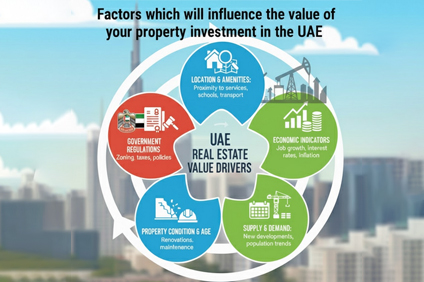
Several critical factors influence real estate property prices in the UAE, including economic conditions, population growth, government policies, infrastructure development, and supply-and-demand dynamics. Before investing, it is crucial to analyze these market dynamics by reviewing official data sources, monitoring supply and demand, and assessing the impact of new policies and projects.

Key factors influencing real estate prices in the UAE

Economic conditions and performance

The overall economic health of the UAE directly impacts property prices.
  • GDP Growth: A robust and diversified economy typically leads to higher disposable income, increasing demand for real estate.
  • Regional and Global Economic Factors:
    Fluctuations in global economic conditions and regional liquidity can affect investor sentiment and capital flows.
  • Interest Rates: Interest rates set by the Central Bank affect mortgage costs and investor affordability. Lower rates can stimulate demand and drive prices up, while higher rates can slow the market.
  • Investor Sentiment: Confidence in the market is crucial. Positive economic forecasts and political stability attract both local and international investors, boosting demand and prices.

Population growth and demographics

The UAE’s rapidly growing population creates sustained demand for housing and commercial properties.

  • Expatriate Influx: The high number of expatriates and high-net-worth individuals moving to the UAE creates a continuous need for residential properties across different segments, from affordable apartments to luxury villas.
  • Segmented Demand: Different demographics create demand for various property types. Young professionals drive the demand for affordable units, while growing families seek mid-range properties and villas.

Government policies and regulations

The UAE government plays a proactive role in shaping the real estate market through regulations designed to attract investment and ensure market stability.

  • Residency Visas: Initiatives like long-term residency and retirement programs encourage long-term stays, boosting demand for freehold properties among foreign investors.
  • Foreign Ownership Laws: Policies allowing full foreign ownership of property in designated freehold areas have significantly increased international investment.
  • Market Regulation: Agencies like the Real Estate Regulatory Agency (RERA) mandate safeguards such as escrow accounts for off-plan projects, ensuring transparency, protecting buyers, and fostering confidence.

Infrastructure development

Ongoing and planned infrastructure projects are major drivers of property value.

  • Transport Links: Properties located near essential transport links (metro, major road networks, airports) often command higher prices due to improved connectivity.
  • Community Facilities: Developments with integrated infrastructure, including schools, hospitals, parks, and retail centers, attract more residents and lead to higher property values.
  • Mega Projects: Visionary new urban districts and major developments can significantly increase property values in and around the development zones.

Supply-and-demand dynamics

The balance between the number of available properties and buyer interest is a fundamental pricing factor.

  • Oversupply: If supply outpaces demand, prices may soften or stabilize in certain segments.
  • Undersupply: Conversely, limited supply in high-demand segments can drive prices up.
  • Segment Performance: Supply-demand dynamics can vary greatly by property type and location.

How to understand market dynamics before investing

  • Analyze Official Market Data: Regularly review official market reports from government sources, such as the Dubai Land De

What are the direct and indirect costs involved in real estate investment?

The UAE’s highly regulated and transparent real estate sector provides investors with a secure and stable environment, with all transactions subject to clear, legal frameworks overseen by government authorities, effectively mitigating the risk of undisclosed or under-the-table costs

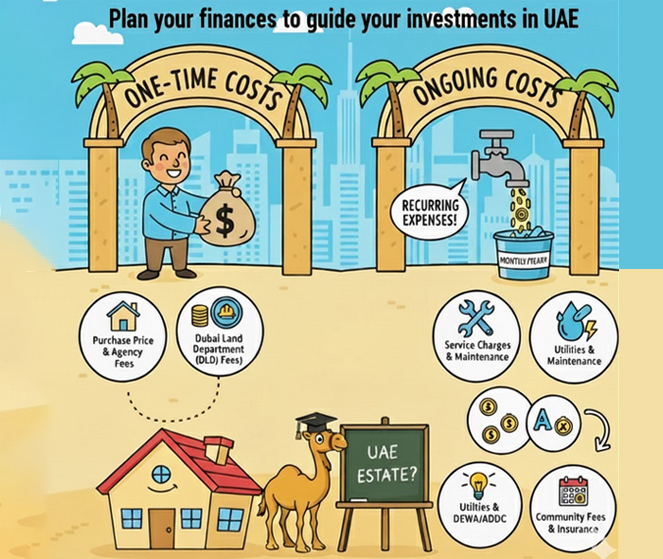
While the UAE government’s transparent data simplifies real estate financial planning, understanding all “full-to-full” expenses upfront is crucial to avoid any unexpected surprises during the investment process.

Purchasing real estate in the UAE involves various one-time upfront costs and ongoing recurring expenses. While many fees are similar for ready and off-plan properties, the timing and some specific charges differ. 

One-Time Costs

These are upfront costs incurred during the purchase process.
Cost ComponentReady Property (Secondary Market)Off-Plan Property (from Developer)Estimated Cost (Dubai)
Down Payment/Initial Payment20% – 30% (for non-residents)10% – 20% (flexible payment plans)Varies by property price
Land Department (DLD) Transfer Fee4% of property value4% of property value (sometimes waived as developer incentive)4% of purchase price
DLD Admin/Registration Trustee FeesAED 4,200 + 5% VAT (for properties > AED 500k)AED 4,200 to AED 5,000 (project-specific)Fixed fee + VAT
Oqood Registration FeeNot applicable (applies to off-plan contracts)Yes, for registering the sales contractApprox. AED 3,000
Real Estate Agent Commission2% of purchase price + 5% VATNo (usually paid by the developer)2% + 5% VAT on commission
No Objection Certificate (NOC) FeeYes, from the developer/master developerYes, from the developerAED 500 – AED 5,000
Mortgage Fees (if applicable)0.25% of loan amount + admin fee (DLD fee)0.25% of loan amount + admin fee (DLD fee)0.25% of loan amount

Which areas and property types in Dubai are currently the most profitable for investors?

Expert investment in UAE property requires a deep understanding of how different investor profiles, from entry-level and salaried individuals to high-net-worth individuals, align with various property types, investment strategies, and financial goal. Focusing on rental yields or capital appreciation, considering budget, and evaluating risk tolerance are crucial steps for maximizing returns. 

Investment strategies by investor profile

Entry-level and salaried individuals (including first-time investors)
  • Investor Profile: This group seeks accessible entry points, manageable financial commitments, and high-demand properties to build their investment portfolio. Their priority is often steady rental income and long-term asset growth.
  • Best property types: Studios, one and two-bedroom apartments, or affordable off-plan units.

Investment strategies:

  • Buy-to-let for stable income: Target properties in high-demand residential areas. Smaller apartments, particularly studios and one-bedrooms, generally offer higher rental yields and are attractive to young professionals and expatriates.
  • Low-entry off-plan properties: Purchase units in new developments, which offer lower initial prices and flexible payment plans. This strategy is ideal for those with a steady income who can manage long-term payments and benefit from potential capital appreciation upon completion.
  • Fractional ownership: Consider real estate tokenization platforms that allow investment in fractions of a property with minimal capital, starting from as low as AED 500. This offers an entry point to the market with diversified, lower-risk exposure.

Investors seeking rental income

  • Investor Profile: The primary focus for these investors is to generate consistent passive income, prioritizing high rental yields and stable occupancy rates.
  • Best property types: Studios, one, and two-bedroom apartments, or short-term holiday homes in tourist hotspots.

Investment strategies:

  • Long-term leases: Acquire units in well-established residential communities. These provide a reliable and low-maintenance cash flow stream from annual rental contracts.
  • Short-term holiday rentals: Leverage Dubai’s tourism industry by leasing properties through platforms like Airbnb. This can generate higher gross yields but requires more active management and licensing from the Department of Tourism and Commerce Marketing (DTCM).

Investors seeking long-term capital appreciation

  • Investor Profile: With a longer investment horizon and a higher risk tolerance, these investors focus on property types with significant potential for value increase over time, typically in emerging or exclusive areas.
  • Best property types: Villas, townhouses, duplexes, triplexes, and luxury apartments.

Investment strategies:

  • Targeting growth areas: Invest in developing or master-planned communities known for infrastructure projects and future growth potential. As the community matures, property values are expected to appreciate significantly.
  • Off-plan for potential gains: Similar to entry-level investors, purchasing off-plan allows securing a property below its future market value. This strategy is best for those who can wait for the project’s completion to realize substantial capital gains.

High-net-worth individuals (HNWIs)

  • Investor Profile: This group has substantial capital and seeks portfolio diversification, exclusive assets, and high-prestige living. Long-term capital growth is a key driver, often complemented by stable income and favorable residency benefits.
  • Best property types: Waterfront villas, luxury duplex and triplex penthouses, and branded residences.

Investment strategies:

  • Exclusivity and prestige: Invest in limited-supply properties within premier, high-prestige communities. Exclusive and waterfront residences attract top-tier tenants and buyers, driving long-term value.
  • Portfolio diversification: Beyond residential, HNWIs can invest in commercial properties or participate in real estate investment trusts (REITs) for diversified exposure to different market segments.
  • Golden Visa benefits: Investments above AED 2 million can qualify for a 10-year Golden Visa, offering long-term residency and stability. This provides peace of mind alongside asset appreciation.

Important considerations for all investors

  • Due diligence: Always conduct thorough research on the property, developer reputation, location, and potential market trends.
  • Hidden costs: Factor in upfront costs like registration fees and commissions, as well as ongoing costs like service charges, maintenance, and insurance.

What is your purpose of purchase?

What type of property are you interested in?

Select the option that best describes your needs.

How many bedrooms do you want?

Specify an acceptable price range

Project delivery or handover date?

What would you like to have nearby?

How would you prefer to be contacted to discuss your inquiry further?

Provide your name and phone number

Where should we send the selection?

🇮🇳 +91

Thank You!

Your property preferences have been submitted successfully.

© 2025 All Rights Reserved by Dubai Properties

    REGISTER YOUR INTEREST


    This will close in 0 seconds